.png?w=auto&h=400)
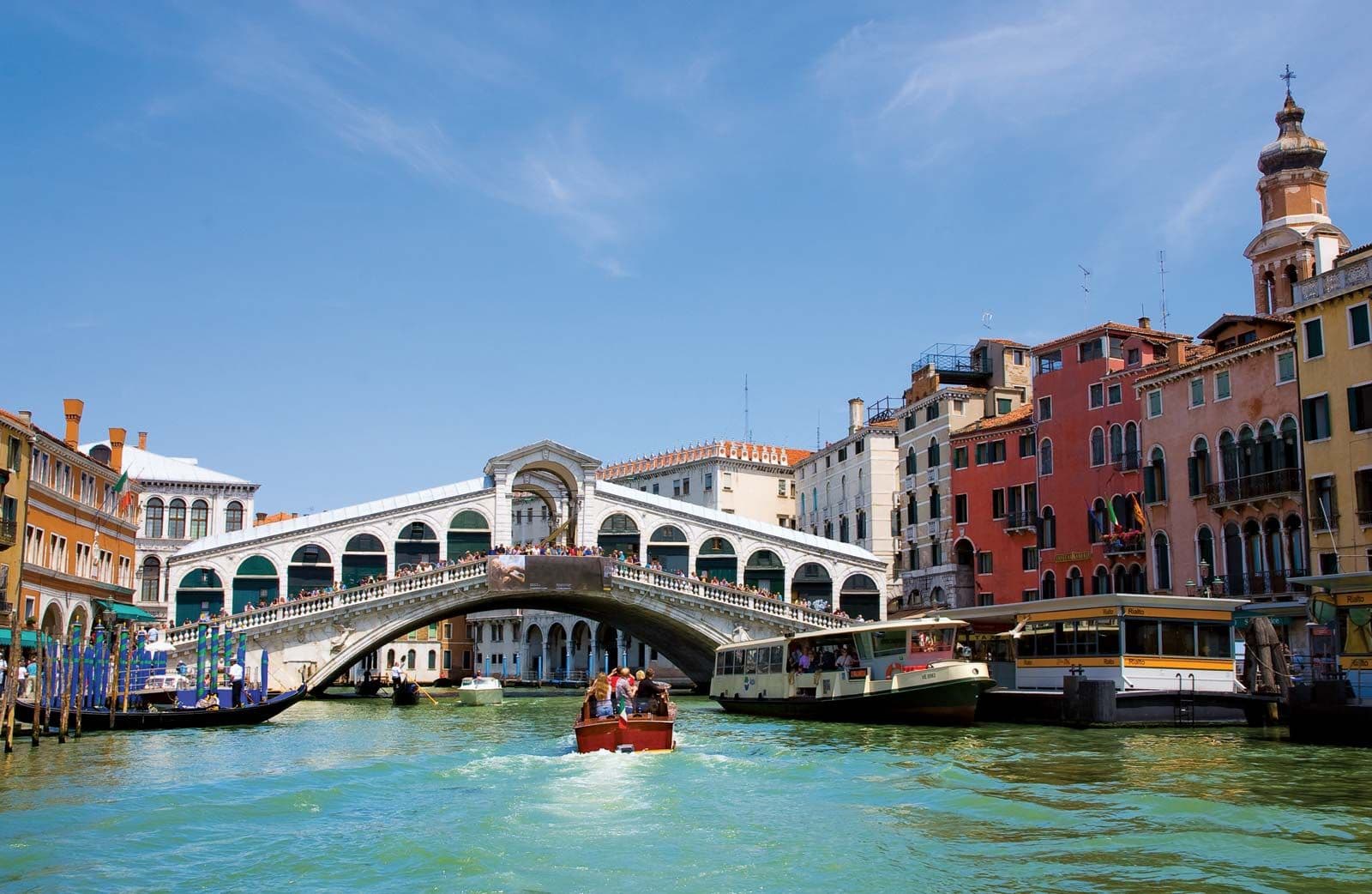


About Grand Canal Venice
History of Grand Canal

The Grand Canal in Venice is unique because it is not human-made but follows an ancient river. It is believed that the path of the Canal was once the route of River Brenta, which ran from northern Italy’s Trentino. The waterway culminates at the Rialto Bridge, the oldest bridge in Venice. The most famous historical mention of the Venice Grand Canal comes from the works of Mark Twain, who was inspired by its enchanting beauty. His 19th-century accounts note in detail how long lines of regal marble palaces lined the Canal and gondolas were the main transport system. In spite of its realist function, the Canal was the seat of vibrant displays of luxury by the rulers and residents.
Ambassadors and important dignitaries, upon entering the city, saw the greatest buildings of the city along the Venice Grand Canal. Even merchants and visitors entering the city witnessed over 170 palatial residences belonging to the Venetian aristocracy along the Canal. The modern-day bridges and structures around the Grand Canal showcase a wide range of architectural styles including Gothic, Romanesque, and Renaissance. A ride along the canal gives glimpses of its classical history throughout the medieval period.
Architecture Grand Canal

Venice Grand Canal Italy is among the rare waterways in the city which are not human-made and follow a natural path. The Canal is 3.8 kilometres long and has a width of 30 to 90 metres at different points. It passes through the heart of Venice and traces a large reverse S-shape when seen from above.
The average depth of the Canal is five metres, and it runs from the Santa Lucia railway station to the iconic Saint Mark’s Basin. Four major bridges run across Canal Grande Venice, while palatial structures showcasing Renaissance, Romanesque, and Gothic styles line the sides.
Bridges on The Grand Canal

The Constitution Bridge is the most recent construction across the Grand Canal, existing since 2008. It connects the districts of Cannaregio and Santa Croce and acts as a link between the Santa Lucia railway station and the Piazzale Roma bus terminal. A sleek modernist bridge designed by Spanish architect Calatrava, the bridge has faced massive public scrutiny. Its high maintenance costs, steep profile which makes it slippery in the wet season, and implications for the Canal’s stability make it controversial.

The only 20th-century bridge on the Grand Canal Venice, the Barefoot Bridge was constructed in 1934. The Fascist-era structure replaced an iron bridge that had existed since the Austrian rule on the city in the nineteenth century. The current bridge is made from white stone and lies next to the Santa Lucia railway station. It connects the districts of Santa Croce in the south and Cannaregio in the north in Venice.

Undoubtedly the most iconic bridge across the Grand Canal Venice Italy, the Rialto Bridge is the city’s oldest bridge. The first structure on this site dated to 1250 and was a wooden drawbridge that allowed large ships on the Canal. After many instances of damage over the centuries, the current Rialto Bridge was built from white stone in 1591. The structure connects Saint Marks with San Polo in Venice and finds mention in Mark Twain’s 19th-century works.

The last bridge across Grand Canal Venice Italy is the Academy Bridge. It is famous as the only wooden bridge over the Canal. Although the bridge was first suggested in 1488, it was never commissioned during the Venetian Republic. The first bridge was built of steel by Austrians in 1854 but was replaced by a wooden structure under the Fascists in 1933. It gets its name from the nearby Accademia di Belle Arti di Venezia.
FAQs
How long is the Grand Canal in Venice?
The length of the Venice Grand Canal Italy is 3.8 kilometres as it runs from the Santa Lucia railway station to Saint Mark’s Basin. You can travel the length of the Canal via gondola rides, private water taxis, and water buses.
What shape does the Grand Canal have?
The Grand Canal is shaped like an inverse S when seen from above. This shape was actually a natural creation as the waterway traces the route of the ancient River Brenta. The design is the reason why the width of the canal differs at various locations.
How deep is the Grand Canal?
The average depth of the Venice Grand Canal is 5 metres. The depth varies at different places through the canal but in general ranges around this number. Due to its natural course, the Grand Canal is slightly deeper as compared to most canals in the city.
How many bridges cross the Grand Canal?
Four bridges cross the Grand Canal of Venice at different points throughout its length. The oldest and most important is the Rialto Bridge, while the newest is the Constitution Bridge. The white-stone Barefoot Bridge is a Fascist-era creation, just like the Accademia Bridge which is also the only wooden bridge on the Grand Canal.
What is the main mode of transportation on the Grand Canal?
Gondolas, water buses, and private water taxis are the main modes of transportation on the Grand Canal. While gondolas are the traditional option, water buses are incredibly popular among tourists who want sightseeing tours. For a more private but fast-paced ride across Venice, you can opt for private water taxis.
What famous building is located on the Grand Canal?
Many famous buildings are located along the Grand Canal, ranging from medieval palaces and beautiful churches to public structures. The oldest is the 13th-century Ca’da Mosto, while popular landmarks include Doge’s Palace, Basilica di San Marco, Palazzo Grassi, and Ca’d’Oro. You can also see Fondaco dei Tedeschi, Palazzo Labia, and Rialto Bridge here.